SURAT TEXTILE INDUSTRY PERSPECTIVE BLOG
The City That Breathes Fabric!
What Surat Textile Gets Right, Where It Is Falling Behind, and Why the Next Decade Will Matter Most
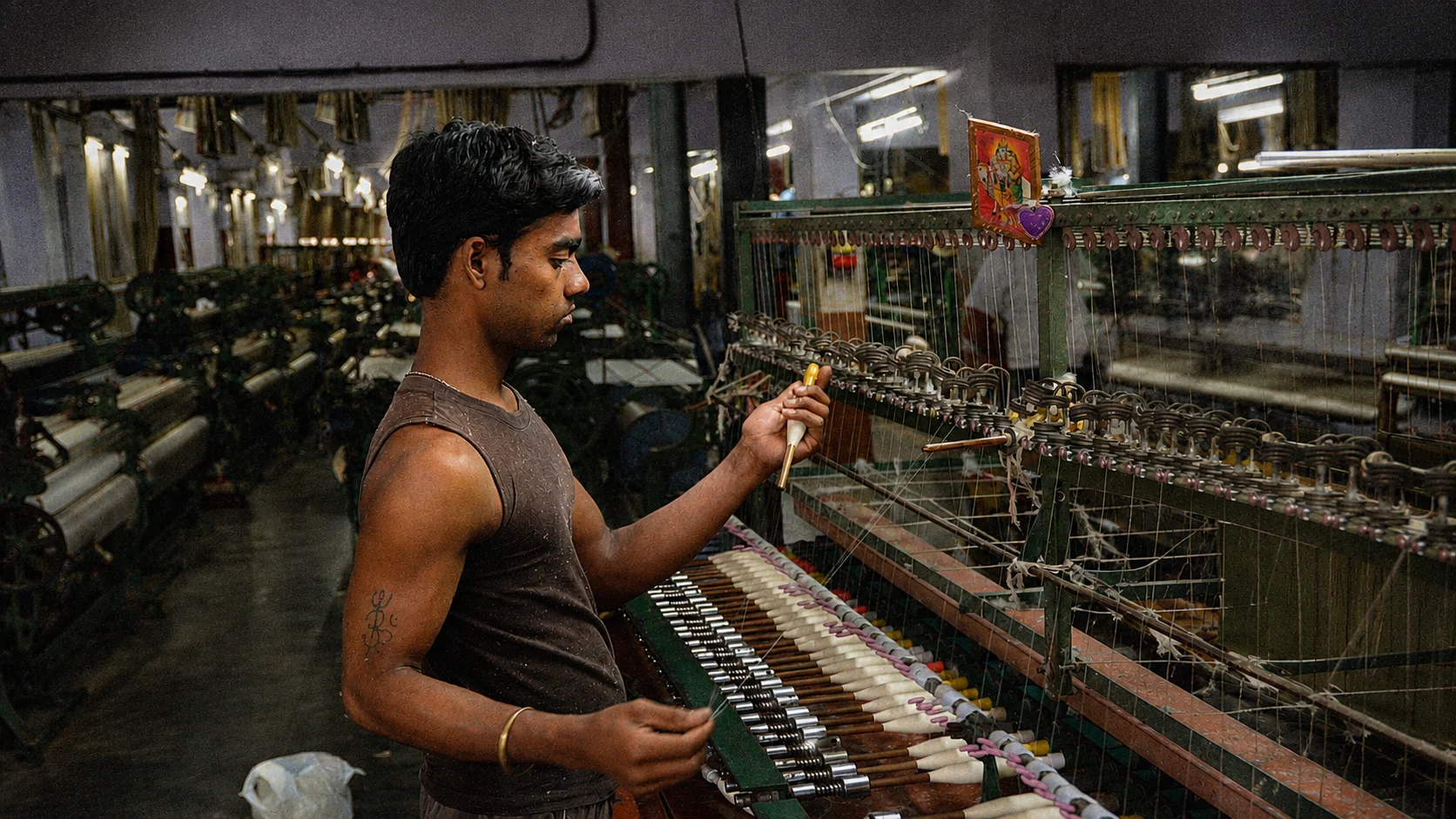
Surat Textile Industry: My Critical Understanding, Observations & Perspective
When people talk about Surat, they often mention diamonds first. But if you actually live here, you realize textiles dominate the city at a level that is difficult to explain to outsiders.
The entire city feels engineered around production.
Factories, dyeing units, markets, transport, labor systems, wholesale networks, brokers, machine operators, and traders all exist in one massive industrial cycle.
On the surface, this looks impressive.
But the more I observed the industry, the more I realized something important:
Surat textile is extremely powerful operationally, but structurally it still feels trapped in an old industrial mindset.
The city produces enormous volume.
But volume alone does not automatically create innovation, long-term value, global respect, or sustainable growth.
And I think this is the biggest contradiction inside Surat’s textile ecosystem.
The industry has scale.
But scale and evolution are not the same thing.
My Understanding of Surat’s Textile Ecosystem
What makes Surat special is not just manufacturing capacity.
It is the ecosystem density.
Everything exists close to everything else:
- Yarn suppliers
- Weaving units
- Dyeing & processing factories
- Embroidery units
- Printing businesses
- Designers
- Traders
- Packaging suppliers
- Transporters
- Wholesale markets
- Export channels
This creates something extremely powerful:
Speed.
A design can move from idea to physical fabric extremely fast.
In many industries, supply chains are spread across cities or countries. In Surat, much of the chain exists within operational reach.
That creates:
- Faster iteration
- Lower production costs
- High-volume manufacturing
- Rapid trend adaptation
- Competitive pricing
This is one reason why Surat became one of India’s biggest textile hubs.
The Real Engine of Surat: People
The textile industry here is not built only on machines.
It is built on people.
Generations of workers, business owners, operators, traders, technicians, and laborers created this ecosystem over decades.
Many businesses started small:
- A few machines
- A rented workspace
- Family labor
- High risk
- Thin profit margins
But through consistency and survival, entire business networks were built.
One thing I noticed about Surat’s business culture is that it moves fast.
People here often care more about execution than presentation.
There is a very practical mindset:
“Can this scale? Can this sell? Can this move faster?”
That mentality helped the city grow aggressively.
What Surat Textile Gets Right
1. Operational Scale Is Incredible
Surat has incredible production capability.
Whether it is sarees, synthetic fabrics, dress materials, embroidery, polyester-based textiles, or mass-market fashion manufacturing — the scale is enormous.
The city can produce at volumes that are difficult for smaller ecosystems to compete with.
2. The Industry Moves Fast
One of the biggest strengths of Surat is adaptation.
Fashion trends change quickly.
Designs that worked last month may fail this month.
But Surat’s ecosystem is extremely responsive.
Manufacturers quickly shift:
- Patterns
- Colors
- Fabrics
- Printing styles
- Embroidery trends
- Market demands
This responsiveness is a major competitive advantage.
3. High Risk-Taking Culture
Surat has a very strong entrepreneurial culture.
Many businesses are family-built, self-funded, and operationally aggressive.
People are willing to:
- Experiment
- Expand quickly
- Take financial risks
- Reinvent product lines
- Operate with high intensity
This creates constant movement inside the market.
4. Massive Economic Dependency
The textile sector supports huge numbers of jobs directly and indirectly.
Not only factory owners.
The ecosystem supports:
- Machine operators
- Designers
- Transport workers
- Small suppliers
- Packaging businesses
- Shop owners
- Sales teams
- Brokers
- Service providers
- Digital marketers
- Export businesses
The ripple effect across the city is massive.
Problems I Think the Industry Still Faces
In my opinion, Surat textile industry has major structural weaknesses that people inside the ecosystem often avoid discussing seriously.
The industry is successful, but success can sometimes hide deeper inefficiencies.
And I think Surat currently risks confusing industrial activity with long-term industrial progress.
1. The Industry Is Obsessed With Price Competition
A large part of the market competes heavily on price.
That creates:
- Margin pressure
- Quality inconsistency
- Overproduction
- Market saturation
Sometimes businesses race toward cheaper production instead of stronger brand identity or innovation.
This works short term, but long term it can limit growth.
2. Surat Manufactures for Others Instead of Building Global Identity
Surat manufactures at scale.
But many globally recognized textile or fashion brands are not actually identified with Surat itself.
The city produces enormous value, yet much of that value is captured elsewhere in branding, retail positioning, and international market perception.
I think this is one of the biggest missed opportunities.
Surat has the industrial capability.
Now it also needs stronger:
- Branding
- Design leadership
- International storytelling
- Technology integration
- Premium positioning
3. Sustainability Is Still Treated Like a Secondary Problem
Textile processing can have significant environmental impact.
Especially:
- Water usage
- Chemical waste
- Energy consumption
- Pollution management
As global standards rise, sustainability will become more important.
Future textile leadership may depend not only on scale — but also on responsible manufacturing.
4. Many Businesses Still Operate With Outdated Thinking
Some businesses are modernizing rapidly.
Others still operate with outdated systems.
I think the future winners will be the companies that integrate:
- AI
- Automation
- Smart manufacturing
- Data-driven supply chains
- ERP systems
- Digital commerce
- Predictive trend analysis
The textile industry globally is becoming increasingly technology-driven.
Surat cannot rely only on traditional operational advantages forever.
Where I Think the Future Is Going
Personally, I think Surat has reached a stage where simply producing more fabric is no longer enough.
It will come from intelligence.
The future may belong to businesses that combine:
- Manufacturing
- AI
- Branding
- Automation
- Design systems
- E-commerce
- Global distribution
- Sustainability
The companies that understand both industrial operations and technology could completely redefine the industry.
Imagine:
- AI-generated textile trend forecasting
- Automated quality inspection
- Smart inventory systems
- Personalized fashion manufacturing
- Real-time supply chain analytics
- Digital-first textile brands from Surat
That combination could become extremely powerful.
But this transition will not happen automatically.
Many businesses still underestimate how dramatically AI, automation, software systems, and global digital commerce will reshape manufacturing.
A large part of the industry still thinks in terms of:
- More machines
- More production
- More volume
- Faster copying
- Lower pricing
But future industrial leadership may depend more on intelligence than raw output.
And honestly, I think this is where Surat still feels behind compared to where it could be.
My Personal Opinion
I think Surat textile industry is both impressive and deeply flawed at the same time.
Its execution power is enormous.
But I also think the ecosystem sometimes lacks:
- Long-term vision
- Design originality
- Global branding ambition
- Technological depth
- Product innovation
- Systematic modernization
A lot of businesses are still focused on surviving market cycles instead of building future-defining companies.
And because of that, the ecosystem can sometimes feel reactive instead of visionary.
At the same time, I think Surat is standing at a very important turning point.
The old model of competing only through speed and low cost may not be enough forever.
The next phase will likely reward:
- Innovation
- Technology
- Brand building
- Sustainability
- Global positioning
- Intelligent systems
And if Surat successfully evolves in those areas, I genuinely believe it can become not just a manufacturing giant — but a globally recognized textile innovation hub.
Final Thoughts
Surat’s textile industry represents something much larger than fabric production.
It represents:
- Migration
- Industrial ambition
- Risk-taking
- Entrepreneurial survival
- Manufacturing scale
- Informal capitalism
- Fast-moving trade ecosystems
- And one of India’s most aggressive industrial cultures
But after observing the industry closely, I think Surat is entering the most dangerous transition period in its modern history.
The old formula that built the city is slowly reaching its limits.
That formula was based on:
- Cheap labour
- High-volume synthetic manufacturing
- Low-margin competition
- Seasonal ethnic wear demand
- Fast copying of trends
- Wholesale market dominance
- And operational speed
For years, this system created enormous economic activity.
But globally, the textile industry is changing very fast.
And honestly, I think many businesses in Surat still underestimate how serious this transition really is.
China Is Not the Future Threat It Is Already Ahead
A lot of people still talk about China like it is a future competitor.
But in reality, China already moved ahead years ago.
China did not become dominant only because of cheap labour.
China built:
- Industrial systems
- Automation infrastructure
- Integrated supply chains
- Advanced logistics
- Technical textile capabilities
- Manufacturing intelligence
- Export ecosystems
- Chemical ecosystems
- Machinery leadership
- And globally recognized manufacturing efficiency
Meanwhile, large parts of Surat still operate through fragmented production networks and trader-driven systems.
China manufactures through systems.
Surat still largely manufactures through operational hustle.
And in the long run, systems usually outperform hustle.
This is the real strategic gap.
The Dangerous Dependence on Traditional Wear
One of the biggest structural weaknesses in Surat textile is its dependence on traditional Indian wear.
A huge portion of the ecosystem revolves around:
- Sarees
- Wedding fabrics
- Lehengas
- Ethnic embroidery
- Seasonal festive collections
- Occasion-based fashion demand
This creates a highly seasonal economy.
Demand rises during:
- Wedding seasons
- Diwali
- Navratri
- Eid
- Regional festivals
Then demand weakens again.
This means many businesses do not operate on stable long-term consumption patterns.
They operate on cultural buying cycles.
And younger consumers are slowly changing those cycles.
Gen Z consumers increasingly spend on:
- Streetwear
- Casualwear
- Athleisure
- International fashion aesthetics
- Online-first brands
- Influencer-driven fashion
- Lifestyle branding
But Surat’s ecosystem still heavily revolves around wholesale ethnic manufacturing.
That creates a structural mismatch between future consumer behavior and the industry’s current production orientation.
The Labour Model Is Becoming Unstable
The textile ecosystem depends heavily on migrant labour.
Large portions of workers come from:
- Bihar
- Uttar Pradesh
- Odisha
- Jharkhand
- Madhya Pradesh
This labour-intensive structure helped Surat grow quickly.
But it also created long-term fragility.
The industry still depends on:
- Long working hours
- Low-cost labour availability
- Labour-heavy production systems
- Continuous migration flow
But younger workers increasingly do not want factory lifestyles with limited upward mobility.
At the same time:
- Living costs are rising
- Housing pressure is increasing
- Wage expectations are changing
- Labour mobility is improving
This means the old labour equation is weakening.
China recognized this shift years ago.
So China automated aggressively.
Large parts of Surat still did not.
Surat Still Competes Like an Old Manufacturing Economy
One of the harshest truths about the ecosystem is that many businesses still think growth means:
- More machines
- More production
- More volume
- Lower pricing
- Faster copying
But modern manufacturing leadership no longer works like that.
Future industrial leaders will compete through:
- AI systems
- Automation
- Smart manufacturing
- Supply chain intelligence
- Predictive demand systems
- Material innovation
- Technical textiles
- Global branding
- Digital commerce ecosystems
This is where Surat still risks falling behind.
The city has scale.
But scale without modernization eventually becomes vulnerable.
Surat Produces Massive Value But Rarely Owns It
This is one of the biggest missed opportunities.
Surat manufactures enormous amounts of textile value.
But most of that value is captured elsewhere.
The city lacks:
- Major global fashion brands
- Premium textile identity
- International design leadership
- Consumer-facing power
- Brand storytelling ecosystems
Most businesses still compete to sell fabric.
Very few compete to build long-term brand value.
And in modern markets, brands usually capture more profit than factories.
China understood this.
Italy understood this.
Japan understood this.
Surat still largely sells manufacturing capability instead of industrial identity.
AI Could Either Save Surat Or Slowly Replace It
I think AI will completely reshape textile manufacturing over the next decade.
The question is whether Surat adapts fast enough.
AI systems can already improve:
- Trend forecasting
- Inventory optimization
- Textile design generation
- Defect detection
- Automated quality control
- Logistics optimization
- Production planning
- Supply chain visibility
Factories using intelligent systems will become:
- Faster
- More predictive
- Less labour dependent
- More cost efficient
- More globally competitive
If Surat ignores this transition, highly automated ecosystems elsewhere could gradually outperform it.
But if Surat aggressively adopts AI and manufacturing intelligence, the city could still reinvent itself.
What Surat Must Do to Stay Competitive
1. Move Beyond Commodity Manufacturing
Competing only on cheap synthetic fabric production is dangerous.
Surat needs expansion into:
- Technical textiles
- Smart fabrics
- Industrial textiles
- Performance materials
- Sustainable textile systems
Commodity-only competition creates long-term vulnerability.
2. Build Brands Instead of Only Supplying Markets
The city needs:
- Digital-first fashion brands
- Export-focused labels
- Direct-to-consumer ecosystems
- Premium positioning
- Global storytelling
Owning the customer matters more than only owning machines.
3. Aggressively Modernize Manufacturing
Automation is no longer optional.
The ecosystem needs:
- Smart factories
- ERP integration
- Robotics
- AI-driven quality systems
- Data-driven supply chains
- Predictive manufacturing systems
Without modernization, operational advantages will slowly weaken.
4. Reduce Dependence on Seasonal Ethnic Demand
The ecosystem must diversify beyond traditional wear.
It should expand into:
- Casualwear
- Sportswear
- Global apparel supply
- Technical fabrics
- International retail ecosystems
Otherwise demand instability will continue.
5. Build Original Design & Innovation Culture
A large portion of the ecosystem still depends on copying trends.
That cannot create long-term industrial leadership.
Surat needs:
- Textile R&D
- Design studios
- Fashion-tech integration
- Material science innovation
- Original product ecosystems
Real industrial power comes from creation — not imitation.
6. Improve Worker Ecosystems
Labour should not only be treated as replaceable operational input.
The industry needs:
- Better housing
- Worker stability
- Skill development
- Safer working environments
- Long-term workforce planning
Otherwise labour instability will worsen over time.
Final Conclusion
I think Surat textile industry is standing at a historic turning point.
The city still has enormous industrial capability.
But capability alone is not enough anymore.
The next decade will likely reward:
- Intelligence over volume
- Systems over hustle
- Branding over commodity selling
- Automation over labour dependency
- Innovation over imitation
And this is exactly where Surat currently feels conflicted.
The ecosystem is extremely powerful operationally.
But strategically, many parts of it still feel trapped in an older industrial mindset.
The biggest danger is not sudden collapse.
The real danger is gradual irrelevance.
An industry can remain large while slowly becoming less globally competitive every year.
And honestly, I think that process may have already started.
However, Surat still has one massive advantage:
It already understands scale.
If the ecosystem modernizes aggressively, adopts AI, builds global brands, invests into design and technology, and evolves beyond low-margin commodity manufacturing, then Surat could still become one of Asia’s most advanced textile ecosystems.
But if the industry continues relying mainly on:
- Cheap pricing
- Labour-heavy operations
- Seasonal ethnic demand
- Fast copying
- And traditional wholesale systems
then the gap between Surat and advanced manufacturing economies will continue growing.
The future textile leaders will not simply produce more fabric.
They will build intelligent industrial systems.
And the next decade will decide whether Surat evolves into one of them or slowly gets left behind by them.